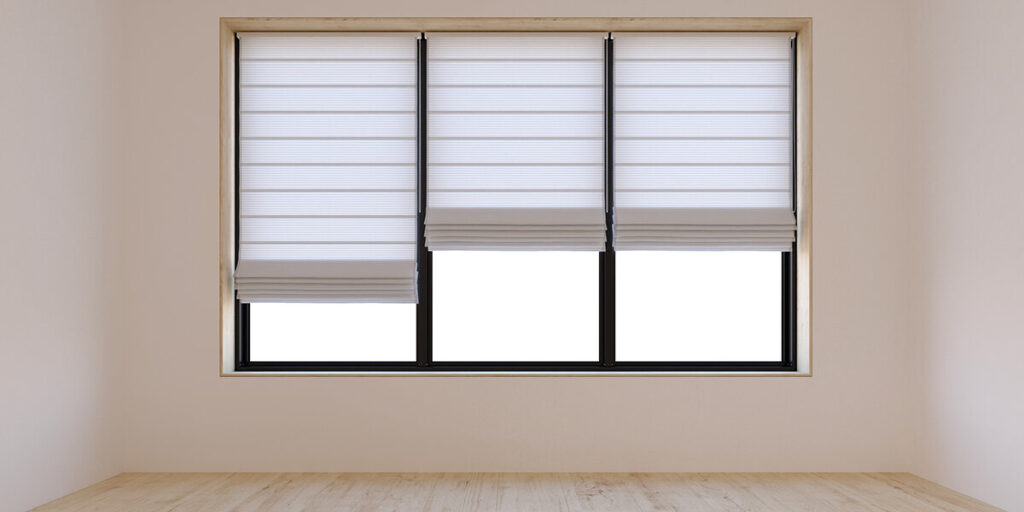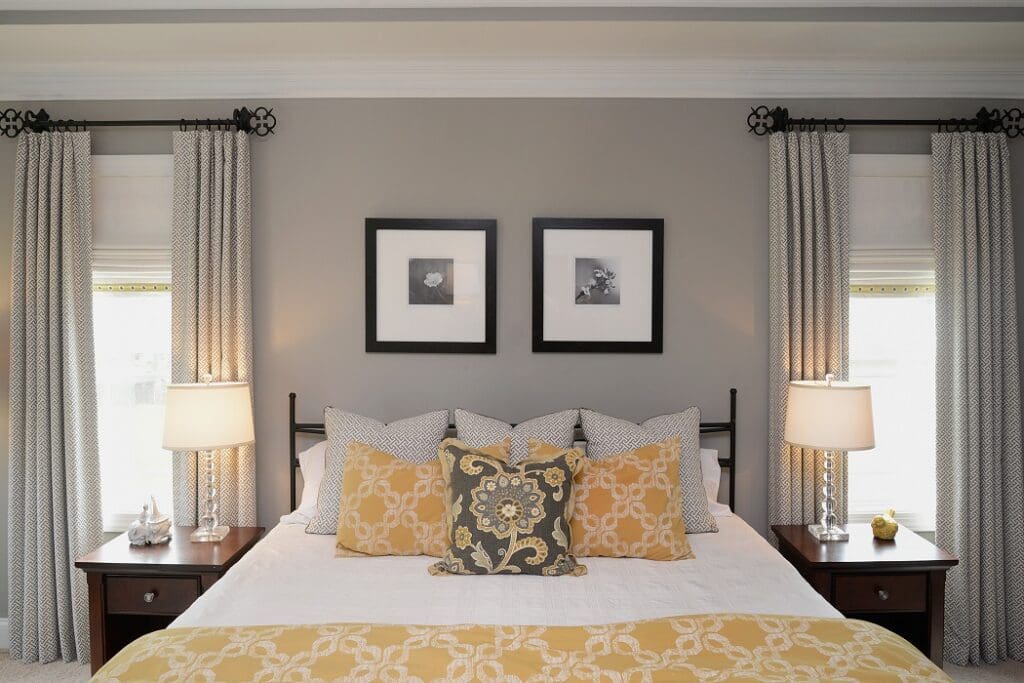

White blinds are an easy default. They can disappear into the trim and let the rest of the room do the talking. But they are not the only good choice. A warmer neutral may feel softer, while a darker color can make the window a stronger part of the design.
The question is not simply which color looks best on a sample. It is how that color will look against your walls, window frames, and furnishings once daylight hits the room.
Should Your Blinds Match the Walls or the Window Trim?
Matching your blinds to the window trim gives the opening a quieter, more unified look. If the trim is painted a clean white, white blinds can be a natural fit. If the trim is cream or another warm neutral, a stark bright white may feel slightly disconnected.
Matching the wall color creates a different effect. It can soften the contrast around the window and keep attention on the room’s furniture or artwork. The colors do not have to be identical. A shade a little lighter or deeper than the wall can be enough to connect them.
If you want the blinds to stand out, contrast is an option too. Black or charcoal blinds against pale walls create definition, especially in a room with dark hardware or furniture accents. For a closer look at that specific pairing, see our article on black windows with white blinds.
What Color Blinds Make a Small Room Feel Larger?
Lighter blinds can keep a small room feeling open, particularly when they are close in color to the walls or trim. The edges of the window become less visually prominent, and the room can feel more continuous.
That does not mean dark blinds are off-limits in a small room. They may be just right if you want contrast or have dark window frames to repeat. The overall balance matters more than a rule that says every compact room needs white blinds.
Neutral, Dark, or Bold: Which Color Fits Your Room?
Warm neutrals and natural wood tones
Cream, taupe, and wood finishes work well when a room already has warm flooring or natural textures. They can also soften the appearance of a bright white window frame. Compare the samples in the room itself, since wood undertones and fabric textures can look quite different under showroom lighting.
White and other light colors
Light-colored blinds are versatile, especially in rooms with pale walls or white trim. But not all whites are alike. A cool white can look crisp beside gray finishes, while a warmer white may be more comfortable next to beige paint or wood furniture.
Black, charcoal, and richer colors
Dark blinds can frame a window beautifully. A deep green or muted blue may also work when the color is already present elsewhere in the space. The goal is not to repeat every accent in the room, but to make the window look intentional.
Blinds Material Changes How the Color Looks
Color is only part of the decision. A painted wood finish reflects light differently from a textured faux-wood surface or a smooth metal slat. The width of the slats and the finish can also change how prominent the treatment feels.
Before choosing from a small digital swatch, look at physical samples near the window. Try them in morning light if that is when you use the room most. If possible, check them again later in the day. A color that looks perfectly neutral in one light may look warmer or cooler in another.
Window Works Studio offers custom window covering options that can be considered alongside the room’s finishes rather than selected in isolation.
Does Blind Color Affect Privacy or Room Darkening?
Not as much as many people expect. A dark color does not automatically make a blind a blackout treatment, and white blinds are not necessarily see-through. Privacy and light control depend heavily on the material, slat position, and how closely the treatment fits the opening.
If nighttime privacy is important, look at what happens when the blinds are closed and the lights are on inside. For bedrooms, the mounting details and any light gaps matter just as much as the color. An appropriate shade or layered treatment may be a better solution than changing the blind color alone.
Choose a Color You Will Still Like When the Room Changes
It helps to decide whether the blinds should blend into the room or become a visible design feature. If your furniture and artwork change often, a neutral treatment may give you more flexibility. If the window frames are a defining architectural feature, a contrasting finish may be worth considering.
Window Works Studio helps homeowners across Greensboro, High Point, Winston-Salem, and Jamestown coordinate window coverings with the way their rooms look and function. Browse our custom window treatment services, or contact our team to compare options for your home.