Buying custom window treatments is a little different from shopping for something off the shelf. There isn’t one standard price because there isn’t one standard window—or one standard solution.
Two rooms with windows of the same size can end up with very different treatments depending on the fabric, operating system, hardware, lining, construction details and how the homeowner wants the room to function.
So, how much do custom window treatments cost?
The most useful answer is to understand what goes into the price and which choices have the greatest impact on your project.
Window Size and Quantity Matter
The size of the window is one of the most basic cost factors. A small shade requires less material and fabrication than a treatment for a wide picture window, sliding door or two-story space.
The number of windows matters, too.
A single statement window may call for a completely different approach than outfitting several rooms or an entire home. With a larger project, it also helps to think about how the treatments relate to one another from room to room.
That’s one advantage of working through a complete custom window treatment design process instead of making every decision separately.
Treatment Type Changes the Price
Blinds, shades, shutters and draperies are made differently, so their pricing is different as well.
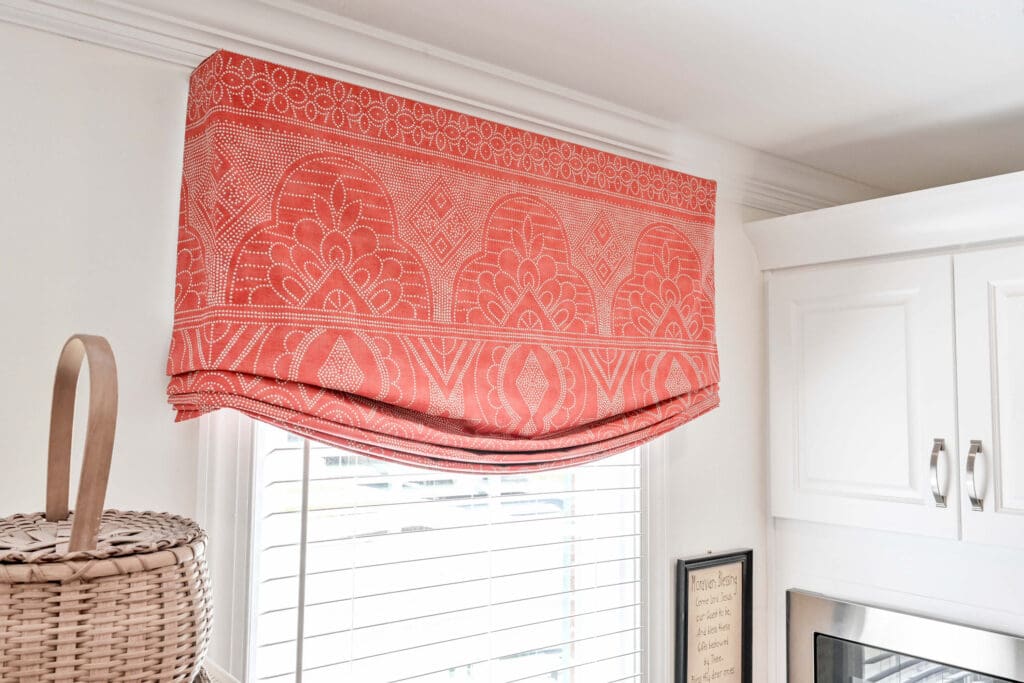
A straightforward roller shade may require fewer design and fabrication steps than a fully lined custom drapery treatment with decorative hardware and trim. A shutter is built specifically to the dimensions and configuration of the window. Roman shades bring fabric selection and custom fabrication into the process.
The best choice shouldn’t come down to price alone. Think first about what you need the treatment to accomplish.
Do you need privacy? Better control over afternoon sun? A softer look? Insulation? A dramatic design element?
The answer helps determine which type of treatment makes sense before you start comparing individual options.
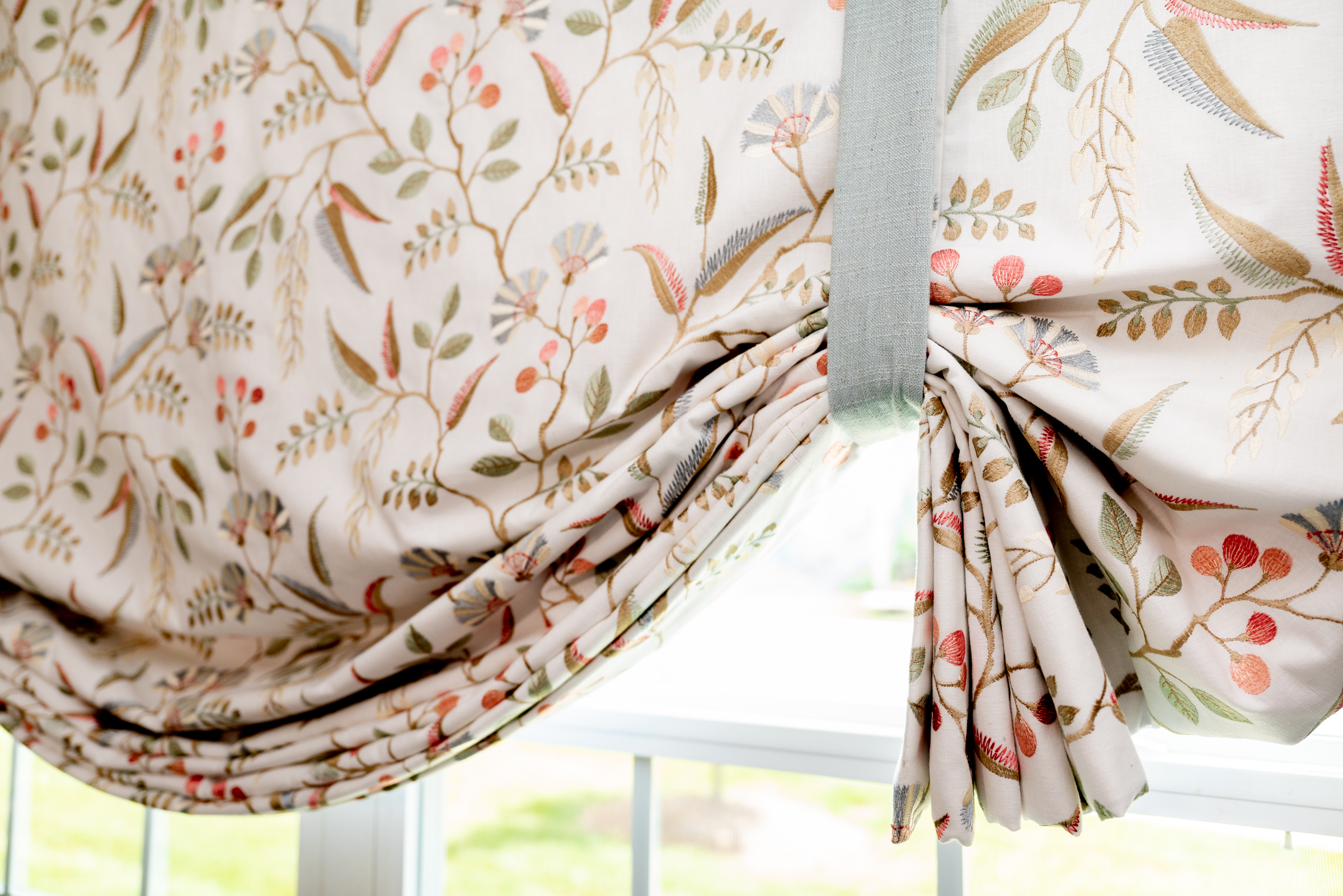
Fabric selection, lining, trim and construction details can all influence the finished treatment and overall investment.
Fabric Can Make a Big Difference
For custom drapery, Roman shades and other soft treatments, fabric is a significant part of both the look and the investment.
Some fabrics are relatively simple. Others involve specialty fibers, detailed patterns, embroidery or designer collections. Pattern repeats can also affect how much fabric is required because the material must be carefully matched across panels.
Then there are the construction details.
Lining, interlining, decorative banding, trim and custom pleating all change how the finished treatment looks and performs.
This is why choosing fabric is about more than finding a color you like. The material has to work for the treatment, the room and the way you want it to hang or fold.
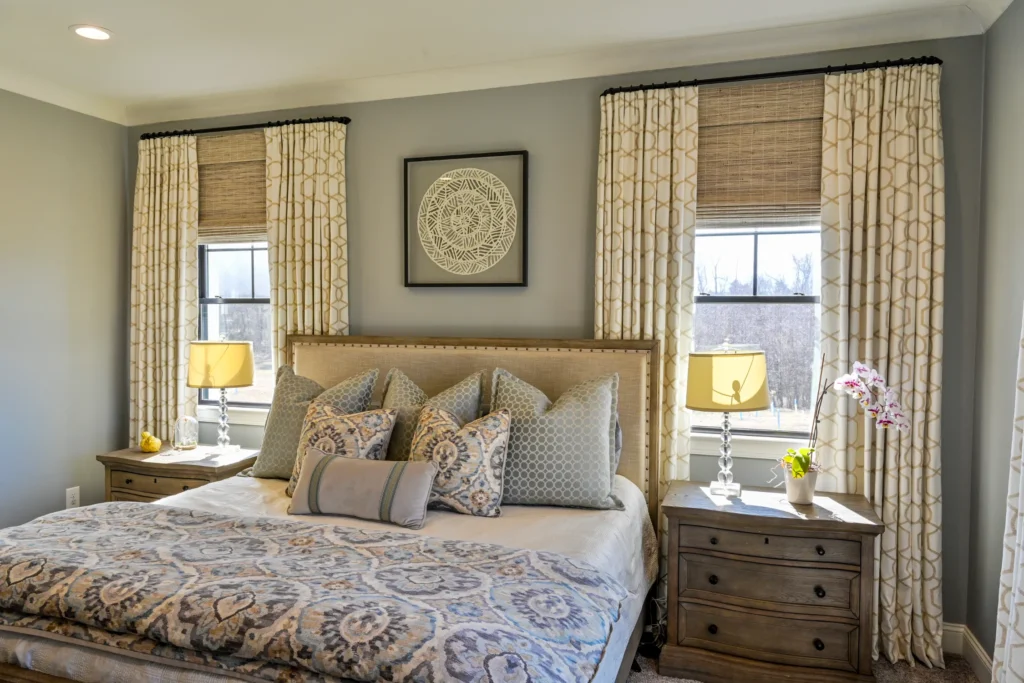
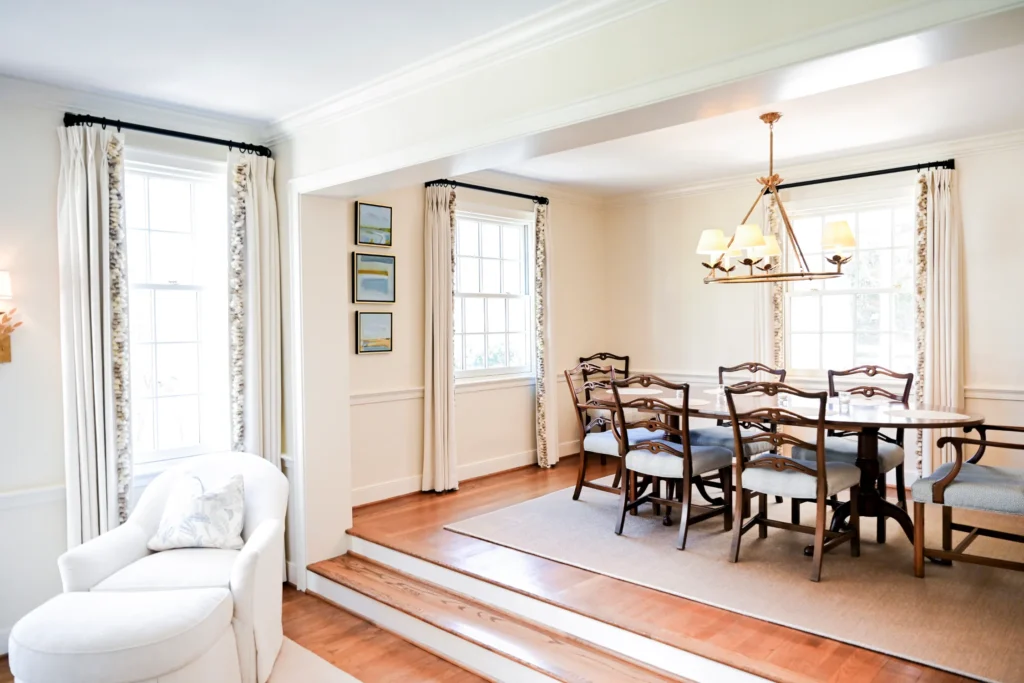
For a more tailored look, custom draperies can incorporate fabric, lining, pleat style, length, fullness and hardware into one finished design.
Hardware Ranges From Simple to Decorative
Drapery hardware is easy to overlook when thinking about the budget, but it can become an important design element.
A simple rod and bracket system is very different from decorative rods, rings, finials or specialty hardware designed for an unusual window.
Hardware also has to support the weight and operation of the treatment properly. A beautiful drapery panel isn’t much use if the hardware doesn’t function well with it.
The goal is to choose hardware that works with the design rather than treating it as an afterthought.
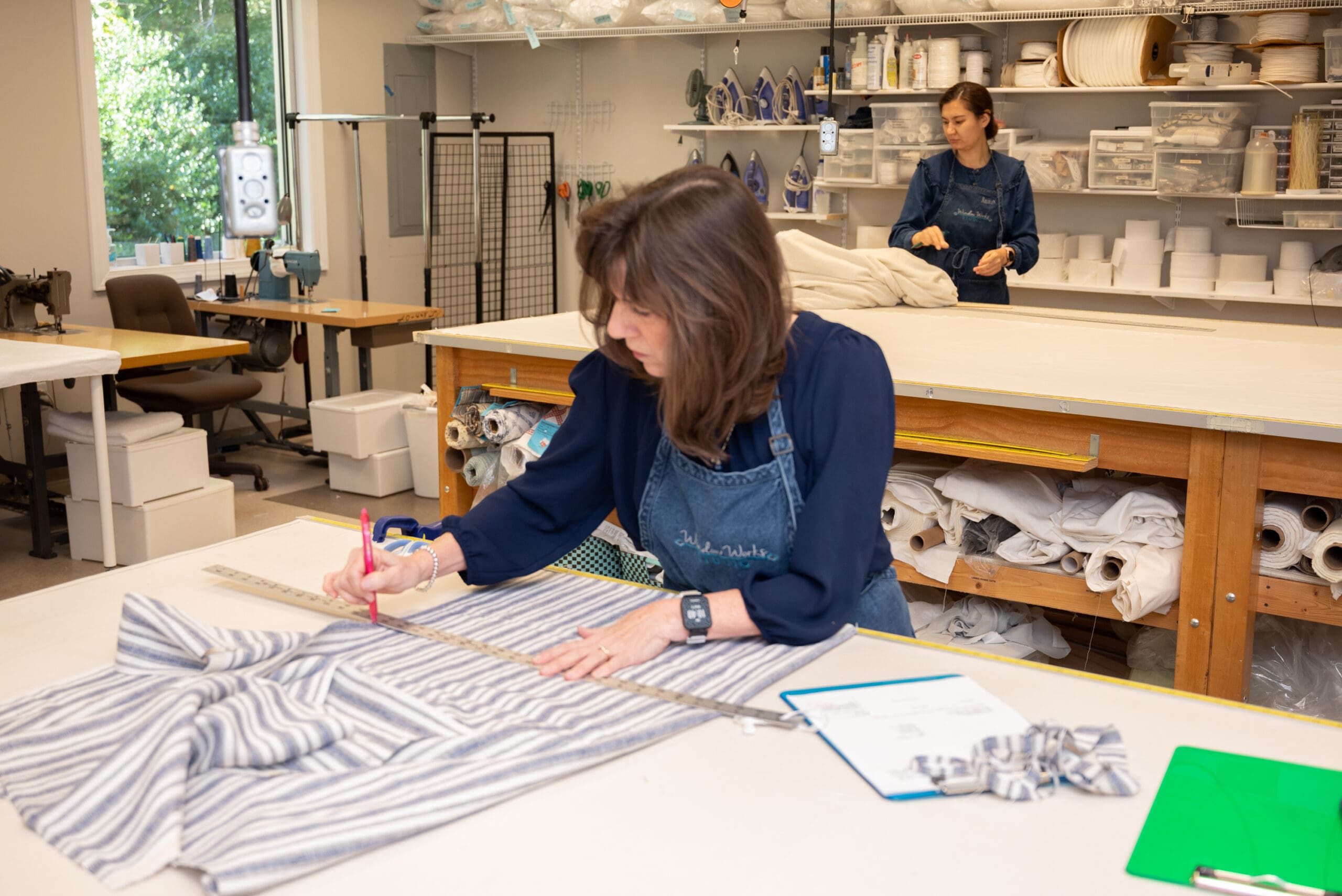
Custom treatments involve skilled measuring, cutting, fabrication and finishing rather than simply selecting a ready-made product.
Custom Fabrication Matters
One of the biggest differences between ready-made and custom window treatments is what happens after the design is selected.
Custom treatments are made for the actual dimensions of your windows.
For soft treatments, that means careful cutting, pattern placement, sewing, lining and finishing. For shades, blinds and shutters, measurements need to account for how the treatment fits and operates within the particular opening.
The finished result should look intentional—not simply close enough.
Professional measuring also helps account for details such as trim, mounting depth, window shape, hardware placement and the way adjacent windows relate to one another.
Installation is the final step that brings all of those earlier decisions together.
That expertise is part of the difference between ordering a product and having a window treatment designed specifically for your home.
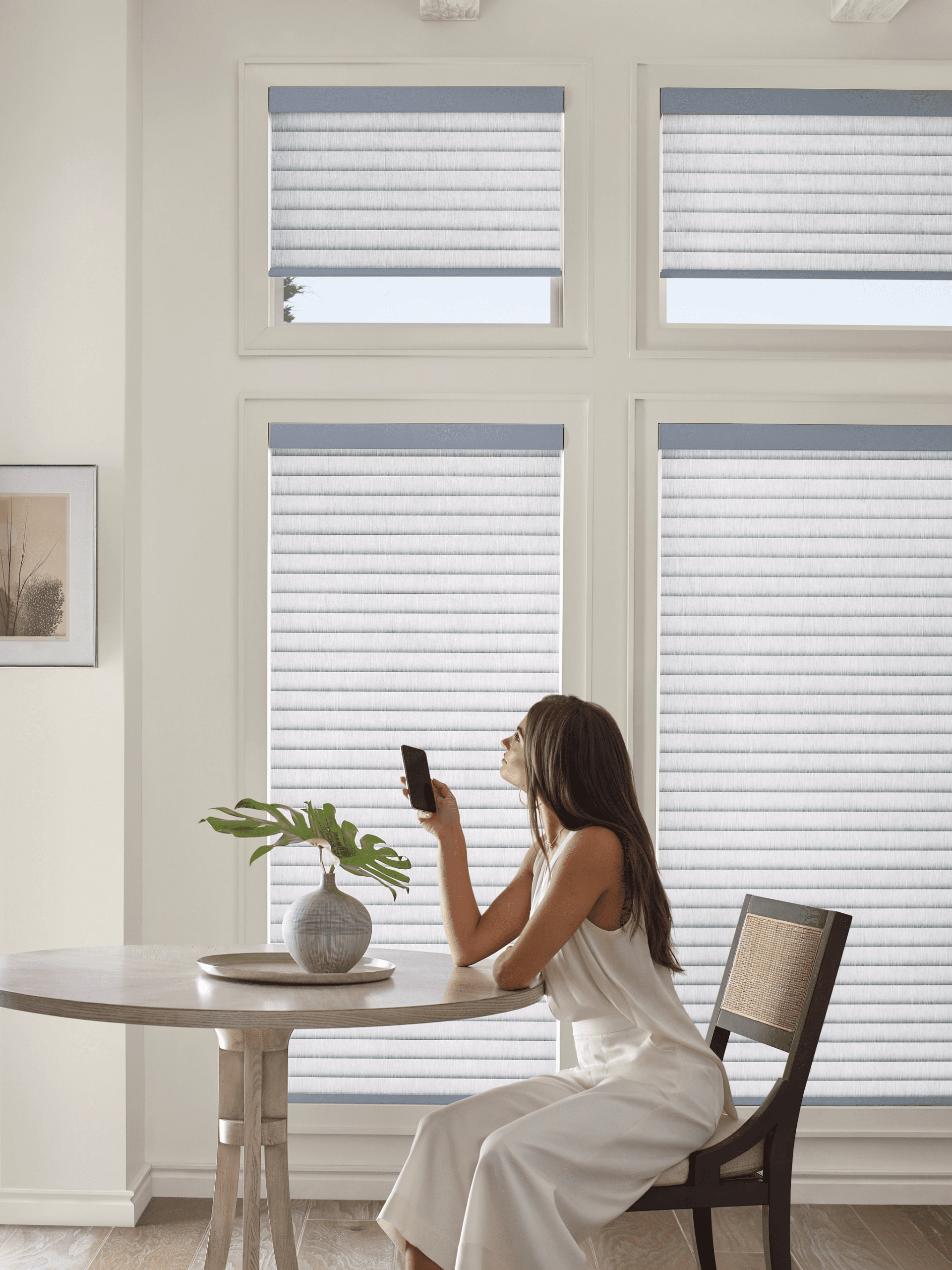
Motorization can add convenience for frequently used, oversized or hard-to-reach window treatments.
Motorization Adds Convenience—and Cost
Motorization changes the investment, but it can also change how you use your window treatments every day.
It can be especially useful for hard-to-reach windows, large shades, rooms with several treatments or spaces where you adjust the light throughout the day.
With motorized window treatments, the price can depend on the treatment itself, the motor and control system, the power source and any smart-home integration.
Motorization doesn’t have to be used everywhere. In many homes, it makes the most sense to use it selectively where it provides a real everyday benefit.
What About Hunter Douglas Window Treatments?
For blinds and shades, the product collection and features you choose can also affect pricing.
Different Hunter Douglas window treatments offer different materials, operating systems, light-control options and design features.
Rather than starting with the most expensive or least expensive option, it usually makes more sense to start with the problem you’re trying to solve.
For example, a bedroom may need privacy and room darkening, while a living room may need glare control without blocking the view. The right solution—and the price—can be different even when the windows are similar.
Why an “Average” Price Can Mislead
An average price can sound helpful, but it can also be misleading.
A single roller shade, a pair of custom drapery panels and a whole-home project aren’t comparable purchases. Neither are a standard window and a large arched or two-story window.
That’s why a consultation is usually the most accurate way to understand the investment.
It allows the designer to look at the windows, understand how the room is used and identify which choices matter to you before recommending specific solutions.
Where to Spend and Where to Simplify
Custom doesn’t mean every element needs to be elaborate.
Sometimes a simple treatment made beautifully is exactly right.
You may decide to invest more in the main living areas while choosing simpler treatments for secondary rooms. You may motorize the windows you use every day while keeping others manually operated. Or you may choose a dramatic fabric for one room and quieter materials elsewhere.
A thoughtful plan helps put the budget where it will make the greatest difference.
Ready for a Refresh?
If you’re planning custom window treatments in Greensboro, High Point, Winston-Salem, Jamestown or elsewhere in the Piedmont Triad, Window Works Studio can help you compare the options and determine what makes sense for your home.
Explore our custom window treatment services or contact our team to talk through your project.