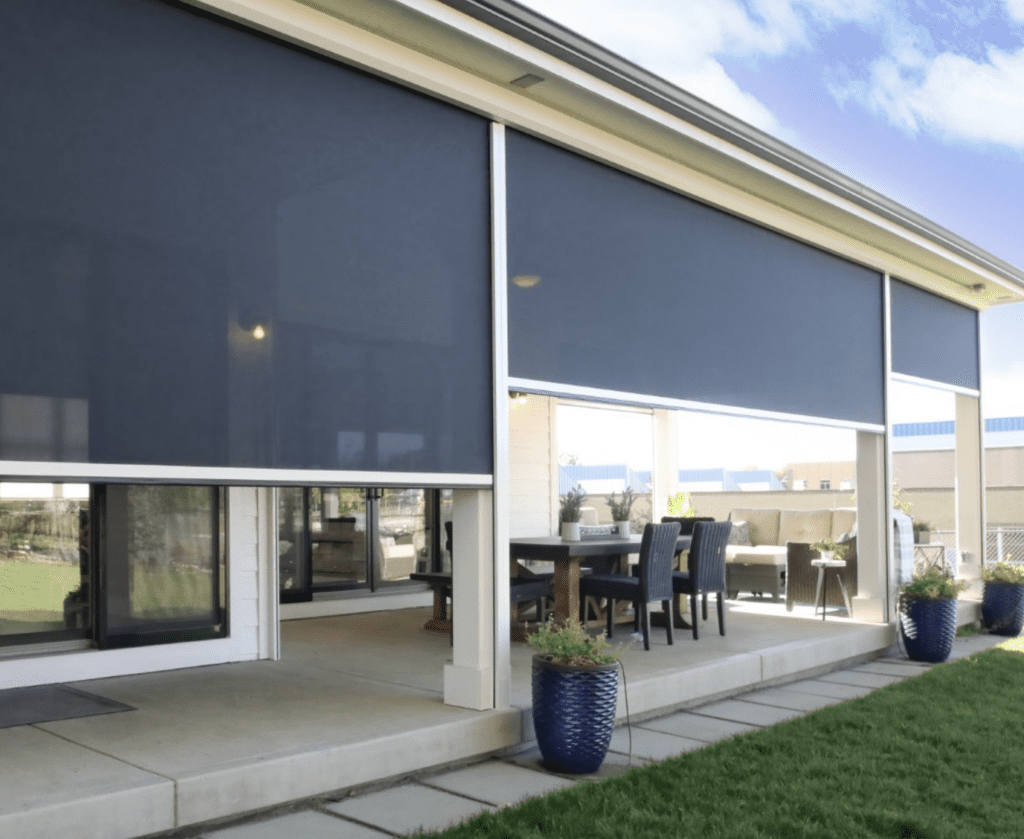
A covered patio can be one of the most enjoyable spaces in your home, until the afternoon sun makes it too bright or the neighbors feel a little too close. Custom outdoor shades help make porches and patios more comfortable by managing sunlight, glare, and privacy without completely separating you from the outdoors.
Once you’ve decided to add exterior shades, there’s another choice to make: should they be manually operated or motorized?
Both options have their advantages. For homeowners throughout Greensboro, High Point, Winston-Salem, and the Piedmont Triad, the right choice depends on the size of the space, how often the shades will be adjusted, and how you want to use your patio. Here’s what to consider before making your decision.
What’s the Difference Between Manual and Motorized Outdoor Shades?
Manual and motorized exterior shades serve the same basic purpose. They provide adjustable coverage that can help manage sunlight, heat, and privacy around outdoor living areas. The primary difference is how you raise and lower them.
Manual outdoor shades are operated by hand, using a crank or another manual mechanism depending on the product. You adjust them when needed without relying on an electrical connection or automated controls.
Motorized outdoor shades use a built-in motor to raise and lower the shade. Depending on the selected system, operation may be available through a remote, wall control, or compatible smart-home technology.
At Window Works Studio, we help homeowners explore custom outdoor and exterior shades that complement their home’s architecture while meeting practical needs for light control and comfort.
When Do Manual Outdoor Shades Make Sense?
Manual shades can be an excellent choice for smaller patios, individual windows, or outdoor areas where frequent adjustments aren’t necessary.
Imagine a covered porch where you usually lower one shade in the late afternoon and raise it again after the sun moves. If the shade is easy to reach and comfortable to operate, a manual system may provide exactly what you need.
Manual outdoor shades are worth considering when:
- You only need to cover one or two accessible openings.
- You plan to adjust the shades occasionally rather than several times each day.
- You prefer a straightforward operating mechanism.
- You want to avoid planning electrical connections or automated controls.
- Keeping the initial investment more manageable is a priority.
The main limitation is convenience. For very wide shades, tall installations, or several openings around a patio, operating each shade by hand can become less practical. The exact effort required depends on the size and mechanism of the product.
When Are Motorized Outdoor Shades Worth Considering?
Motorized outdoor shades become especially appealing when convenience makes a meaningful difference in how you use your space.
Picture a large covered patio with multiple openings. The afternoon sun shifts, and you want to lower several shades before sitting down with friends. Instead of moving around the patio to adjust each one, a compatible motorized system allows you to make those changes with a control.
Motorization may be particularly useful for:
- Large or hard-to-reach patio openings.
- Covered porches with multiple exterior shades.
- Outdoor dining and entertaining areas that need frequent adjustments.
- Homeowners who prefer remote or wall-control operation.
- Projects where compatible automation features are an important part of the overall design.
Some systems also support app controls or additional automation options. These capabilities depend on the manufacturer, motor, and control package, so they should be confirmed before selecting a product.

Motorized systems generally involve a greater initial investment than comparable manual options because of the motor and controls. Depending on the installation, they may also require additional planning for power and future servicing.
For homeowners already considering motorized window treatments elsewhere in the home, it’s worth discussing whether an exterior system can fit naturally into the overall automation plan. Compatibility should never be assumed between different product lines.
What About Sunlight, Heat, and Privacy?
It’s easy to focus on the operating system, but the shade fabric itself is just as important.
Exterior shade fabrics are available with different levels of openness and light filtering. A more open screen can preserve more of your view, while a tighter weave may provide stronger glare reduction and greater daytime screening. The actual result depends on the selected material, color, and lighting conditions.
Think about what bothers you most when you’re sitting outside. Is it direct afternoon sunlight? Glare across the dining table? A neighboring property visible from the seating area?
These questions help determine the appropriate fabric and placement before choosing manual or motorized operation.
Privacy is also affected by lighting. A shade that provides useful daytime screening may offer less privacy after dark when the patio is illuminated. If evening privacy is a priority, be sure to discuss how the chosen fabric performs at night.
Can Outdoor Shades Handle Wind and Rain?
Outdoor shades are designed for exterior applications, but that doesn’t mean every system can remain lowered during severe weather.
Wind tolerance depends on the product, shade dimensions, mounting method, fabric, and any available guiding or retention system. Some products have additional wind-management features, but those features should never be treated as a guarantee against storm damage.
Before installation, confirm the manufacturer’s operating limits and recommendations for raising the shades during strong winds or storms.
Motorization can make it easier to raise several shades promptly, but it does not make them storm-proof. A manual system also needs to be operated according to the manufacturer’s weather guidance.
Installation Matters as Much as the Operating System
Every outdoor space has different architectural details. A shade that works well across a simple covered opening may need a different approach on a pergola or porch with unusual dimensions.
Professional planning should consider the available mounting surfaces, width and height of each opening, surrounding structures, power requirements where applicable, and how the shades will look when fully raised.
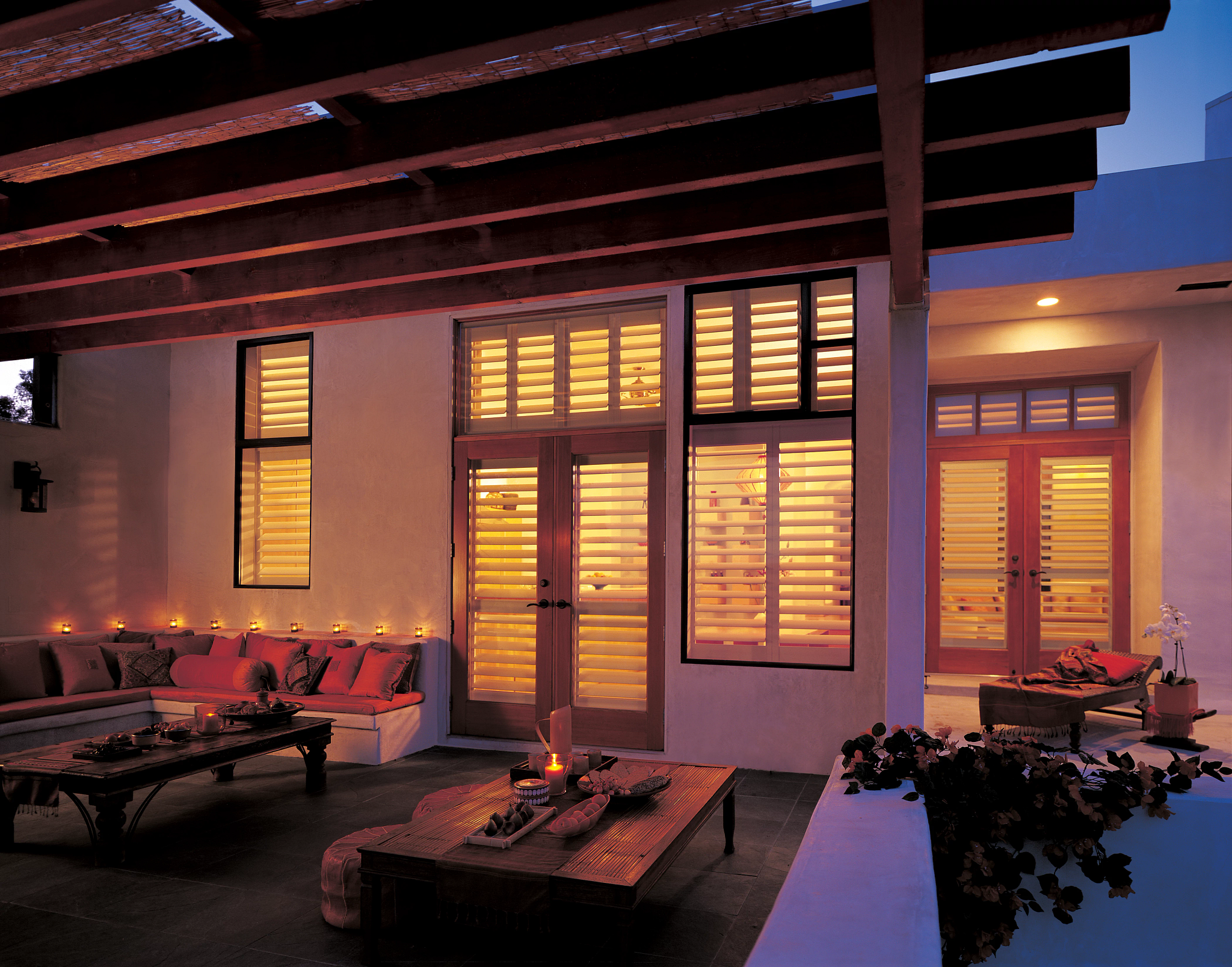
If your patio has multiple openings, it’s also important to consider whether all shades need the same operation. In some projects, a combination of manual and motorized solutions may be more practical than choosing a single system for every opening.
The goal is to create a clean, intentional installation that works with the structure of your home rather than feeling like an afterthought.
Consider the Entire Outdoor Living Space
Exterior shades can make a patio more useful, but they are only one part of creating an inviting outdoor environment.
Think about your seating arrangement, outdoor dining area, and how the space feels at different times of day. Shades can help manage sunlight over frequently used areas, while comfortable furnishings encourage you to enjoy the space more often.
At Window Works Studio, our outdoor living services also include custom cushions and decorative pillows. Coordinating fabrics and colors helps the entire patio feel connected to the style of your home.

A thoughtfully designed outdoor area isn’t just about blocking the sun. It’s about creating a place where reading, entertaining, and relaxing feel effortless.
Which Option Is Right for Your Patio?
The decision usually becomes clearer when you think about how often you’ll use the shades and how easy they will be to reach.
If you have a small covered porch and need occasional adjustments, manual outdoor shades may be the simplest practical choice. If you have a large patio, several openings, or frequent changes in sunlight, motorized shades may offer convenience that makes the additional investment worthwhile.
Before making your decision, ask yourself:
- How many openings need shade coverage?
- Will the shades be raised and lowered every day?
- Are all the openings easy to reach?
- Would remote operation make the space easier to use?
- What fabric openness and privacy level are appropriate?
- What are the installation, weather, and power considerations?
There isn’t one answer that fits every patio. The best system is the one that suits the space and feels comfortable to operate long after installation.
Create a More Comfortable Outdoor Space With Window Works Studio
Choosing custom outdoor shades starts with understanding your home and how you want to enjoy it. Whether a manual system is all you need or motorization is a better fit, thoughtful design and professional installation make a difference.
At Window Works Studio in Jamestown, we help homeowners throughout Greensboro, High Point, Winston-Salem, and the Piedmont Triad plan exterior shades and coordinated outdoor furnishings that balance comfort, beauty, and everyday function.
Explore our outdoor living solutions or contact us to schedule a design consultation. We’ll help you compare the options and create an outdoor space you’ll enjoy spending time in.