Bedroom window treatments have a bigger job than treatments in many other rooms.
They need to look good during the day, provide privacy when you need it and give you control over how much morning or evening light enters the room.
For some bedrooms, room darkening is the priority. For others, it’s privacy without making the space feel closed off.
There isn’t one treatment that’s right for every bedroom.
The best solution depends on your windows, the direction they face, your privacy needs and how dark you want the room to become.
Start With the Amount of Darkness You Actually Want
“Light filtering,” “room darkening” and “blackout” don’t mean exactly the same thing.
A light-filtering shade softens daylight but still allows some light into the room. That can be beautiful in a bedroom where complete darkness isn’t necessary.
Room-darkening treatments reduce significantly more light and are often a better fit for bedrooms where early morning sun is a problem.
Blackout materials are designed for the greatest light control, but the fabric is only part of the equation. Light can still enter around the edges of a treatment depending on the window, mounting method and product.
That’s why it helps to think about the whole window rather than choosing a material based on the word “blackout” alone.
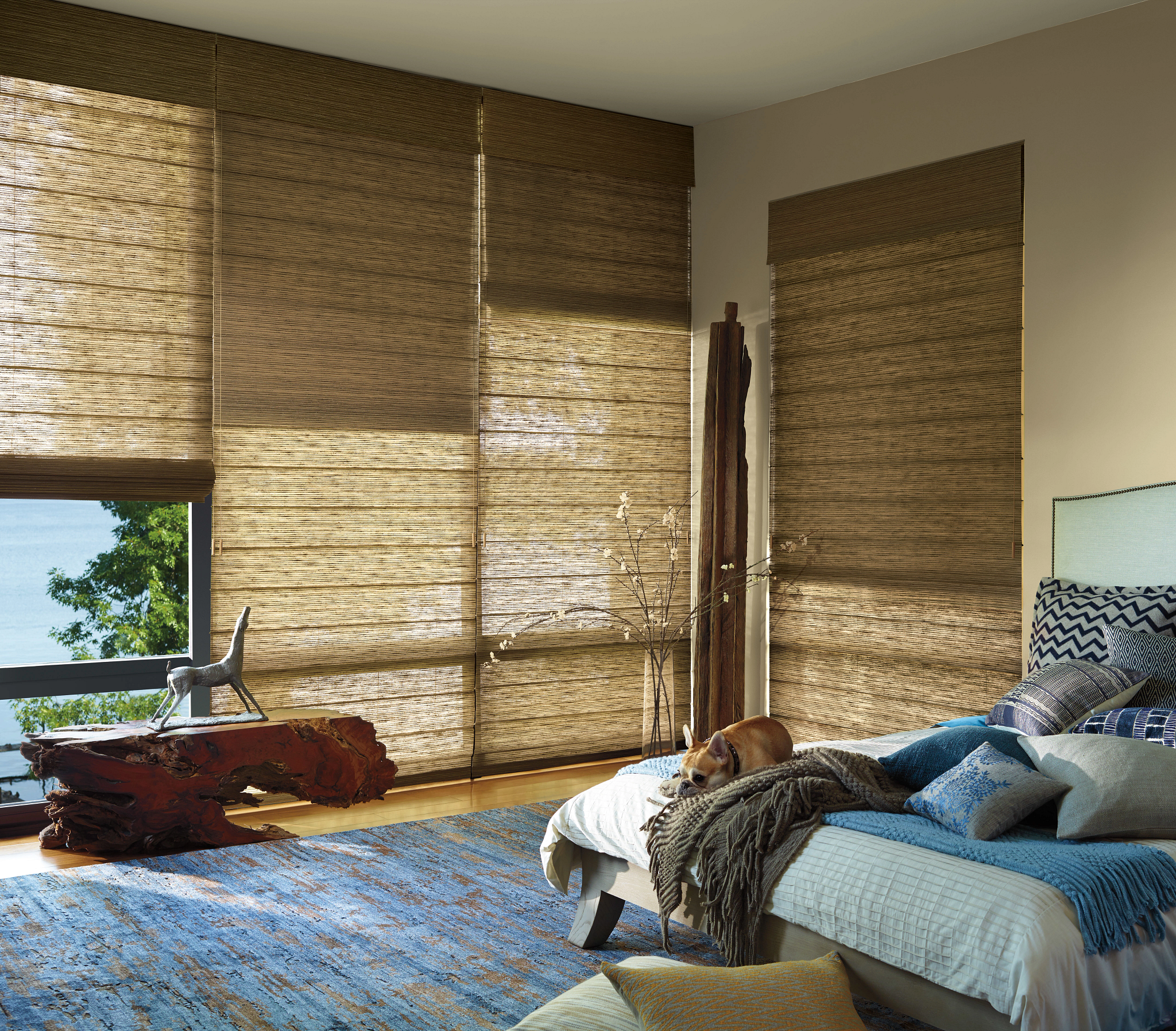
The right bedroom treatment can balance natural light, privacy and the overall look of the room.
Honeycomb Shades: Clean, Comfortable and Versatile
Honeycomb and cellular shades are a strong bedroom option because they combine a clean appearance with privacy and flexible light-control choices.
Their cellular construction creates pockets within the shade, giving the treatment a soft, tailored look while adding another layer at the window.
Depending on the fabric selected, they can range from light filtering to room darkening.
They’re especially useful in bedrooms where you want the treatment to feel quiet and unobtrusive rather than becoming the main decorative feature of the room.
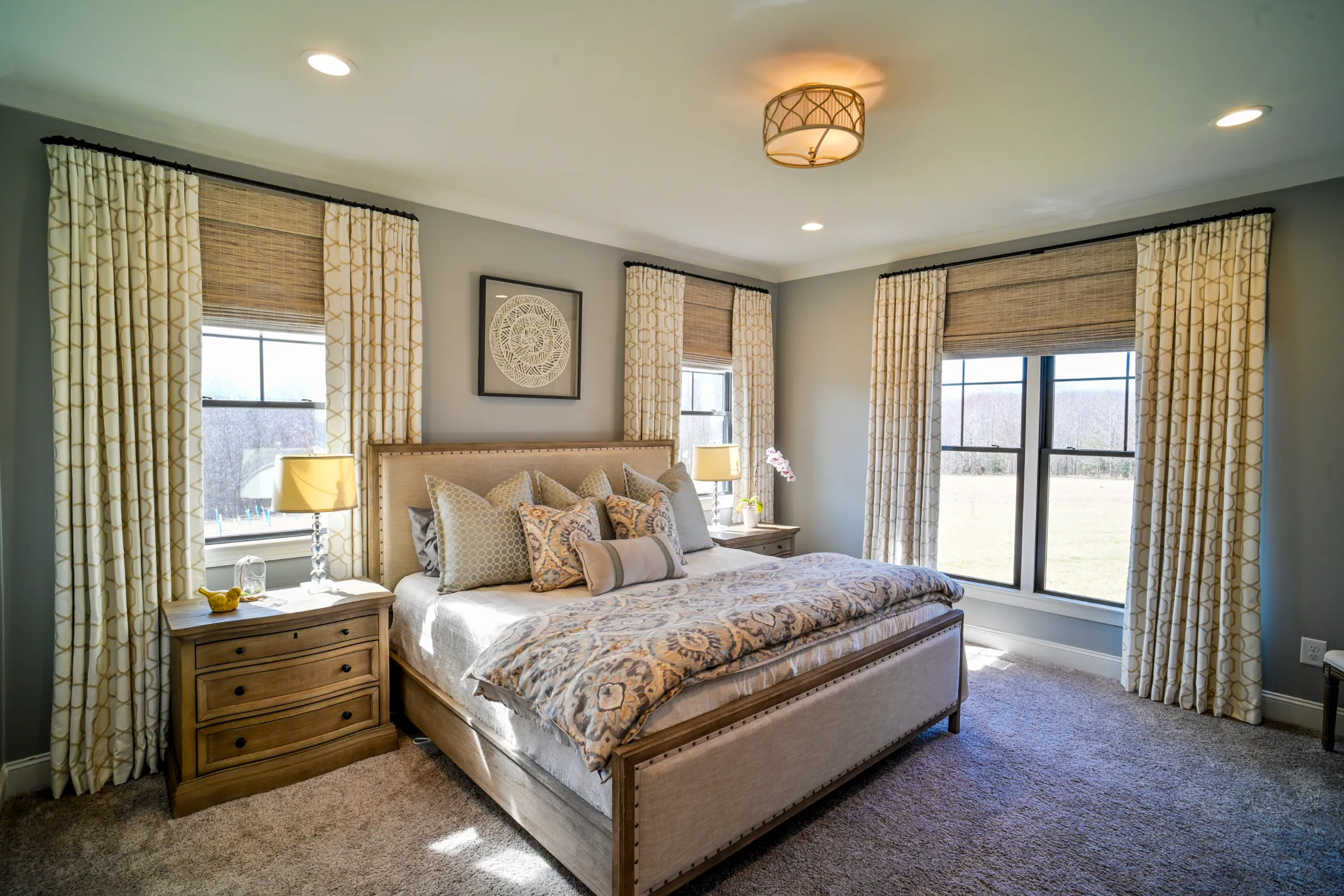
Shade materials and opacity can be selected around the amount of daylight and privacy a bedroom needs.
Roman Shades: Softness Without Full Drapery
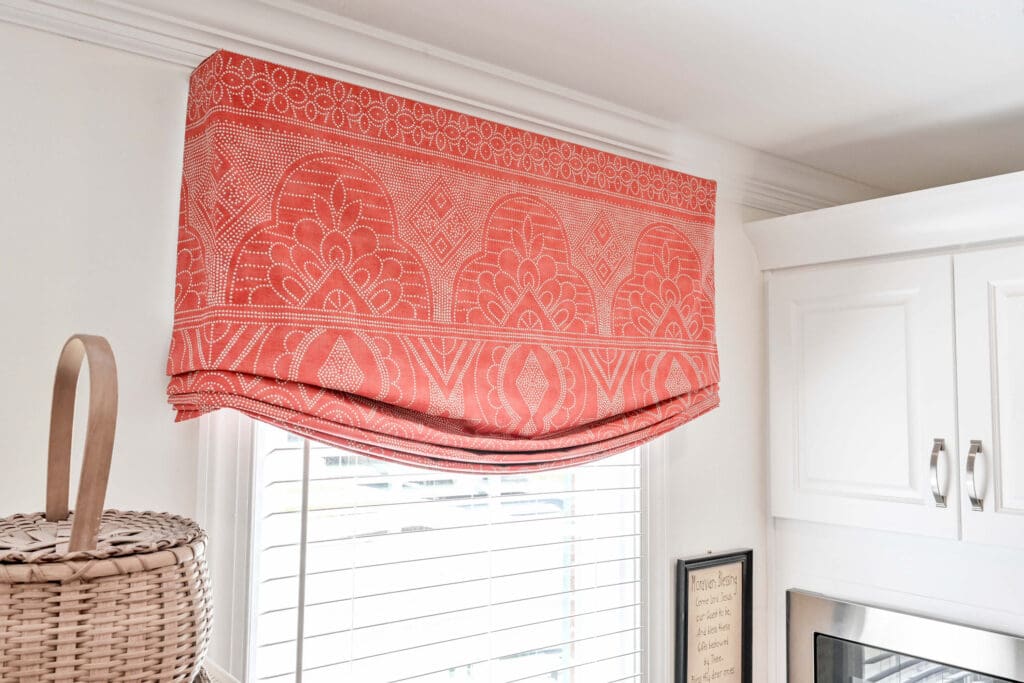
For a bedroom that needs more texture and personality, Roman shades offer the softness of fabric in a streamlined treatment.
When raised, the fabric folds neatly. When lowered, it creates a more finished, upholstered feeling at the window than many hard treatments.
Fabric choice and lining are important here.
A decorative fabric may be beautiful but allow more light than you want. Adding an appropriate lining can increase privacy and room darkening while also changing the weight and appearance of the finished shade.
Roman shades are particularly useful when you want the window treatment to feel integrated with the bedding, upholstery or other fabrics in the room.
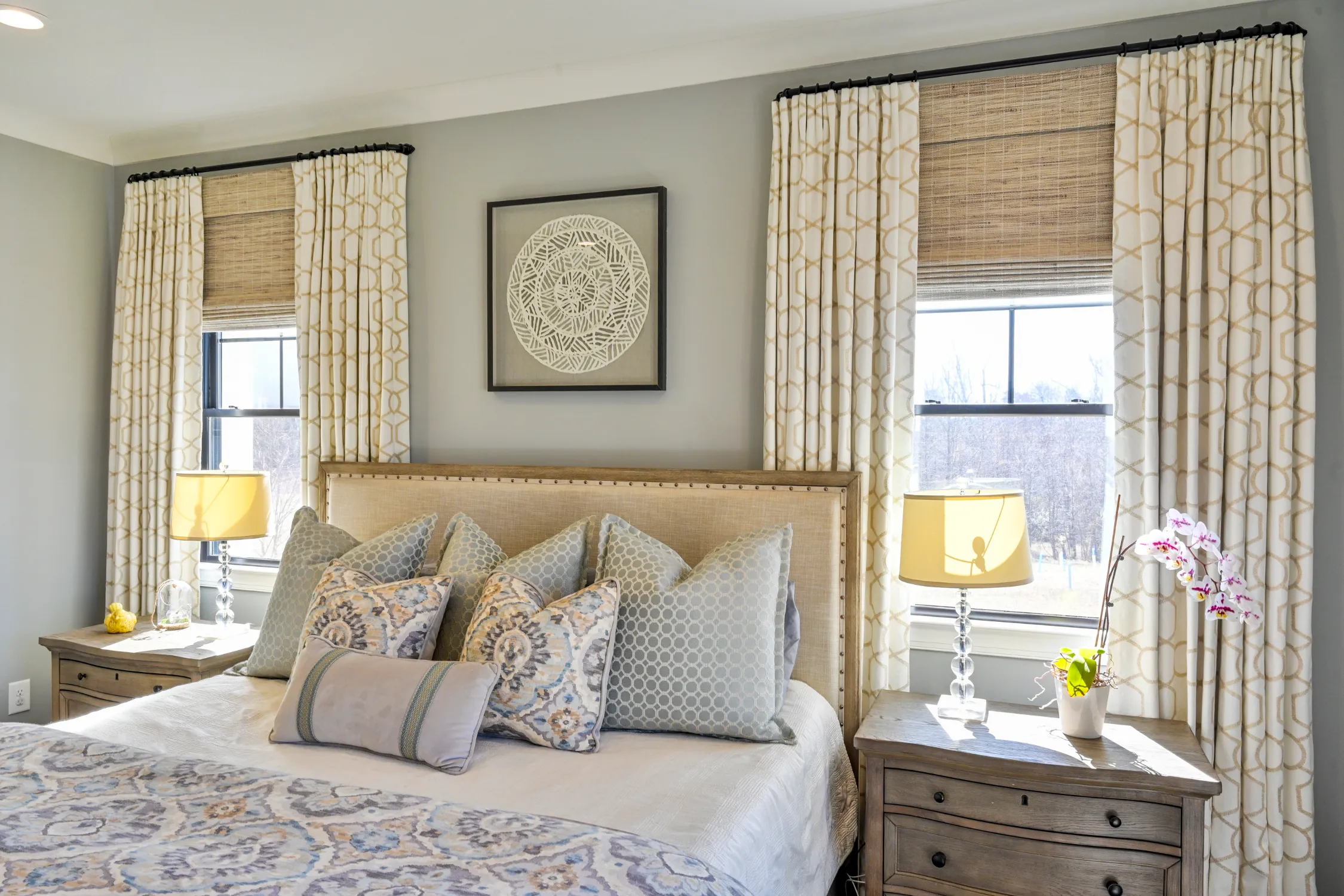
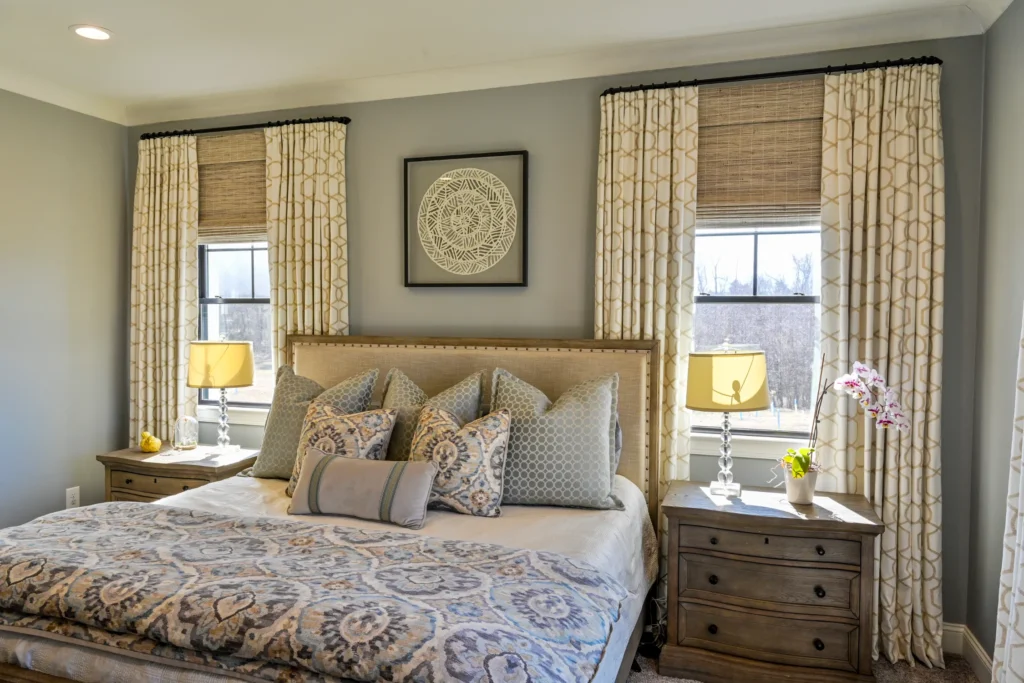
Layering shades and drapery gives a bedroom more flexibility for both privacy and light control.
Drapery Adds Privacy and Softness
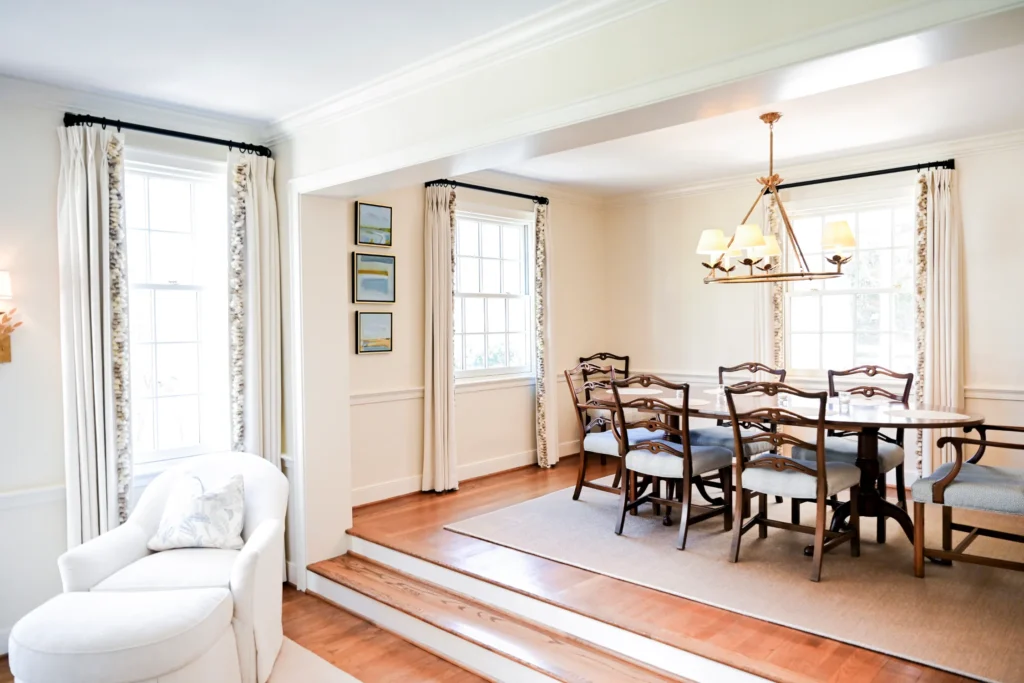
Custom draperies can provide both practical light control and the softness many people want in a bedroom.
They can be used on their own or layered over another treatment.
That layered approach is useful because the two treatments can do different jobs.
A shade can handle everyday privacy and light control, while drapery adds softness, color and another layer of coverage when you want the room darker.
Lining also matters. Depending on the design, drapery can be lined for additional privacy and light control rather than functioning only as decoration.
Layering Often Gives You the Most Control
One of the most flexible bedroom solutions is layering.
- A cellular shade with decorative drapery
- A Roman shade with side panels
- A room-darkening shade with softer fabric treatments
- A privacy shade combined with drapery for nighttime coverage
Layering lets one treatment handle the functional needs while another contributes more of the room’s design.
It can also make the window feel more finished, particularly in a primary bedroom where fabrics and furnishings are meant to work together.
Sheer Shades: Better for Daytime Privacy Than Darkness
Sheer treatments can be beautiful in bedrooms, but they serve a different purpose.
They are designed to soften and filter daylight while maintaining a lighter feeling in the room. Some offer adjustable vanes or fabric elements that give you more control over privacy.
They can be a good choice where daytime privacy is the bigger concern and room darkening is less important.
For a bedroom that needs substantial darkness at night, however, a sheer treatment may need to be paired with another layer or replaced by a more opaque option.
A treatment that handles privacy beautifully during the day isn’t automatically the right treatment for controlling early-morning light.
Don’t Forget the Direction the Bedroom Faces
The same shade can feel completely different depending on the window.
An east-facing bedroom may receive strong early morning light. A west-facing room can become bright later in the day. Street-facing bedrooms may need more privacy than windows facing a wooded backyard.
Window size matters too.
Large windows can introduce more light around the room even when much of the glass is covered. Smaller windows may need a treatment that preserves as much daylight as possible during waking hours.
These details are why it’s useful to make the treatment fit the bedroom rather than automatically choosing the same product throughout the house.
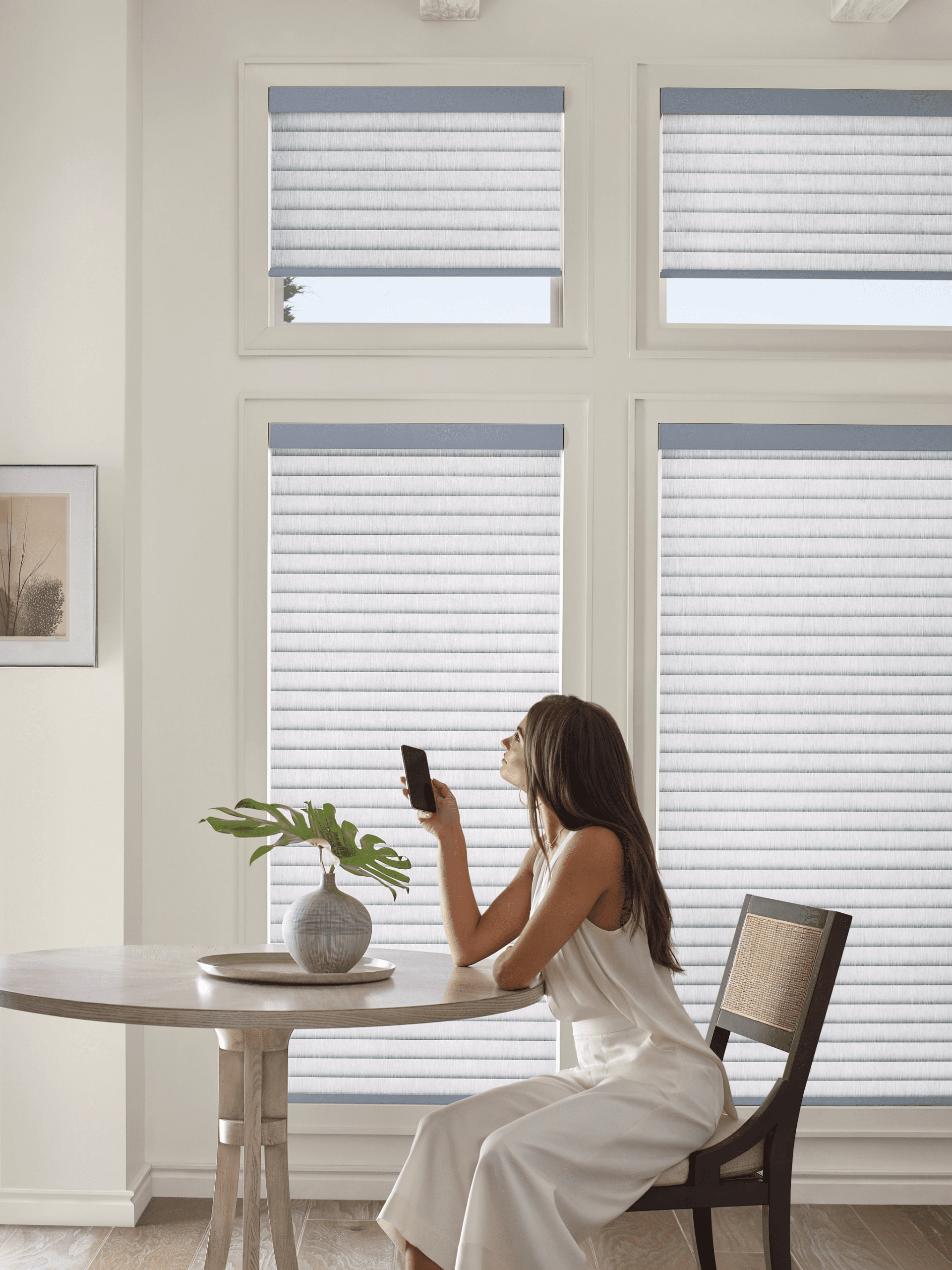
Motorized controls can make it easier to adjust bedroom shades throughout the day.
Motorization Can Be Especially Useful in Bedrooms
There’s something practical about being able to adjust bedroom shades without walking from window to window.
Motorized window treatments can be useful for large windows, hard-to-reach windows or rooms with several shades.
They can also make it easier to change the room from daytime light and privacy to nighttime coverage.
Motorization isn’t necessary for every bedroom, but it can be especially useful where adjusting multiple treatments is part of the daily routine.
What If You Need Privacy During the Day?
Complete coverage isn’t always the goal.
In a bedroom that faces a neighbor, sidewalk or street, you may want privacy during the day without losing all of the natural light.
That’s where the type of shade and how it operates becomes especially important.
Some Hunter Douglas window shades provide flexible positioning and light-control options beyond a simple shade that only moves from the bottom up.
The right solution allows you to protect the part of the window that needs privacy while keeping the room comfortable and bright enough for daytime use.
Choose the Treatment Around the Room
It’s easy to start with a product name, but bedrooms usually turn out better when you start with the room itself.
Consider how dark you want the room, whether you need daytime privacy, when direct sunlight enters the space and whether you want the treatment to blend quietly into the room or become part of the design.
Then think about whether layering or motorization would make the room easier to use.
Once those questions are answered, the list of appropriate treatments becomes much shorter.
Ready for a Refresh?
Window Works Studio helps homeowners throughout Greensboro, High Point, Winston-Salem, Jamestown and the Piedmont Triad choose bedroom treatments that balance privacy, light control and design.
Explore our Hunter Douglas window shades or contact our team to talk through the right combination for your bedroom.